
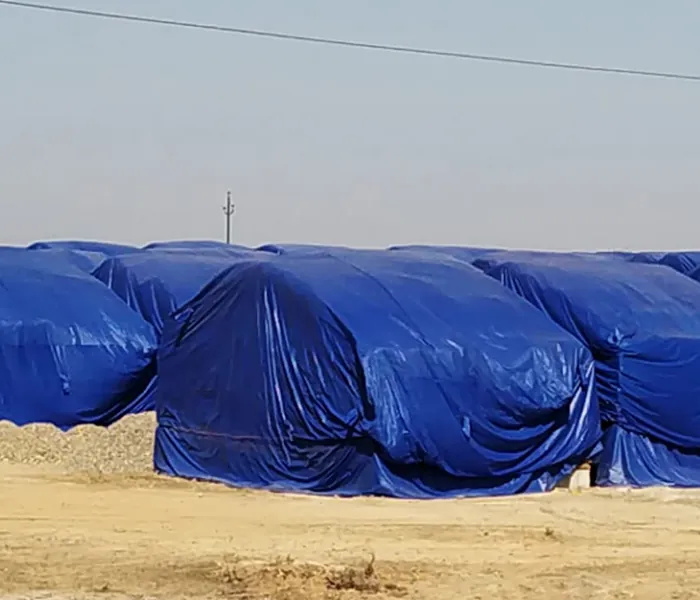
On a construction site, rain and sun cost money: wet cement, washed-away sand, rusting steel and spoiled finishes. A stock of good tarpaulins is one of the cheapest ways to protect materials and keep work moving, especially through the monsoon.
Keep cement dry
Cement starts to harden when it absorbs moisture, so bags left open to rain or damp air can be wasted. Stack bags on a raised base, off the ground, and cover the stack completely.
Cover sand and aggregate
Uncovered heaps of sand and aggregate get washed into drains in heavy rain and blown around in dry wind. A tied-down cover keeps the heap where you left it and the material ready to use.
Protect steel and fittings
Reinforcement steel and stored fittings left in the rain start to rust. Raise them off the ground and cover them, so they stay dry between deliveries and use.
Shield finished work and openings
During the monsoon, tarpaulins can close off window and door openings and cover unfinished roofs, so rain does not reach finished floors, plaster or stored materials inside.
Ground sheets and shelters
- Lay a sheet under materials to keep them out of the mud.
- Rig a temporary shelter for workers, tools and equipment.
- Cover machinery that stays on site overnight.
Which tarpaulin for site work
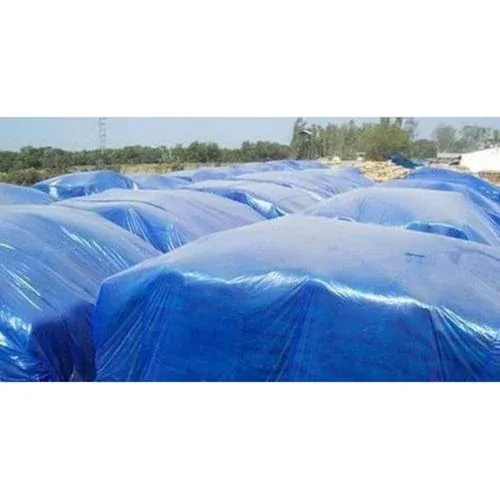
Site tarpaulins get dragged, tied, untied and reused, often for months. A heavy, multilayer, UV-resistant grade such as 150 GSM holds up best; our tarpaulin GSM guide compares the options. Our Indoline multilayer tarpaulins are made from bonded layers of mLDPE, LDPE and LLDPE: 100% waterproof, with a UV-resistant coating and reinforced edges, in 90, 120, 150 and 200 GSM, or any GSM from 70 to 200 on orders of 2 tons.
Builders use our tarpaulins for construction site protection. See our tarpaulin manufacturer in Ahmedabad, Gujarat page.