
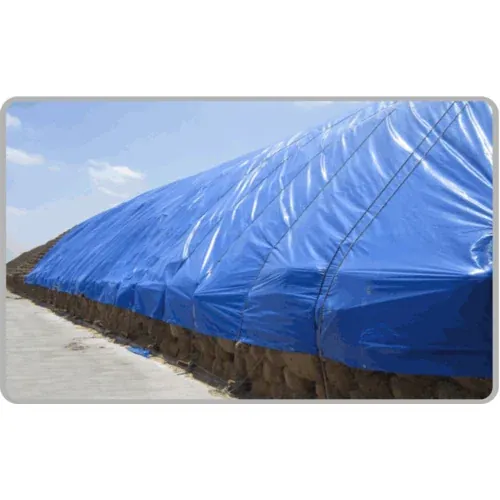
A good tarpaulin can serve for many seasons, or fail in a few weeks, depending mostly on how it is used. These habits cost nothing and make every sheet last longer.
Tie it down tight
Flapping is the fastest way to wear out a tarpaulin. Tie it snug along its edges, evenly all the way round, and add ties wherever it still moves in the wind.
Don't let water pool
Pooled water is heavy. It stretches the sheet, the pocket deepens, and the sheet eventually tears. Give every cover and roof a slope, and clear standing water after rain.
Pad sharp edges and corners
Corners of stacks, machines, truck bodies and frames rub through a sheet over time. Pad them with old sacks, cardboard or a scrap of tarpaulin where the sheet presses on them.
Lift it, don't drag it
Dragging a sheet over rough ground or concrete scratches it. Carry it, or fold it before you move it.
Clean it gently
Wash off mud and dirt with water and, if needed, a mild soap. Avoid harsh solvents and hard scrubbing brushes, which damage the surface.
Dry it before you fold it
Folding a wet tarpaulin traps moisture and leaves it musty and stained. Let it dry completely first.
Store it out of the sun
When it is not in use, keep it folded in a cool, dry place out of direct sunlight, away from sharp objects and rodents.
Repair small holes early
A small cut grows quickly in the wind. Patch it with tarpaulin repair tape or a glued patch as soon as you see it.
Start with the right tarpaulin
Care goes further on a sheet that suits the job. A multilayer, UV-resistant tarpaulin at the right GSM starts with a head start; see our tarpaulin GSM guide and multilayer vs single-layer tarpaulin. Our Indoline multilayer tarpaulins are made from bonded layers of mLDPE, LDPE and LLDPE: 100% waterproof, with a UV-resistant coating and reinforced edges, in 90, 120, 150 and 200 GSM, or any GSM from 70 to 200 on orders of 2 tons.